Edges and Temperature
For the full real-time version with detailed commentary, check out the Oil Tier 2 beginner video on the website.
Video Transcript……
Warm and Cool Colours — Creating Life and Depth
One of the most powerful tools in painting is not detail, but temperature — the relationship between warm and cool colours.
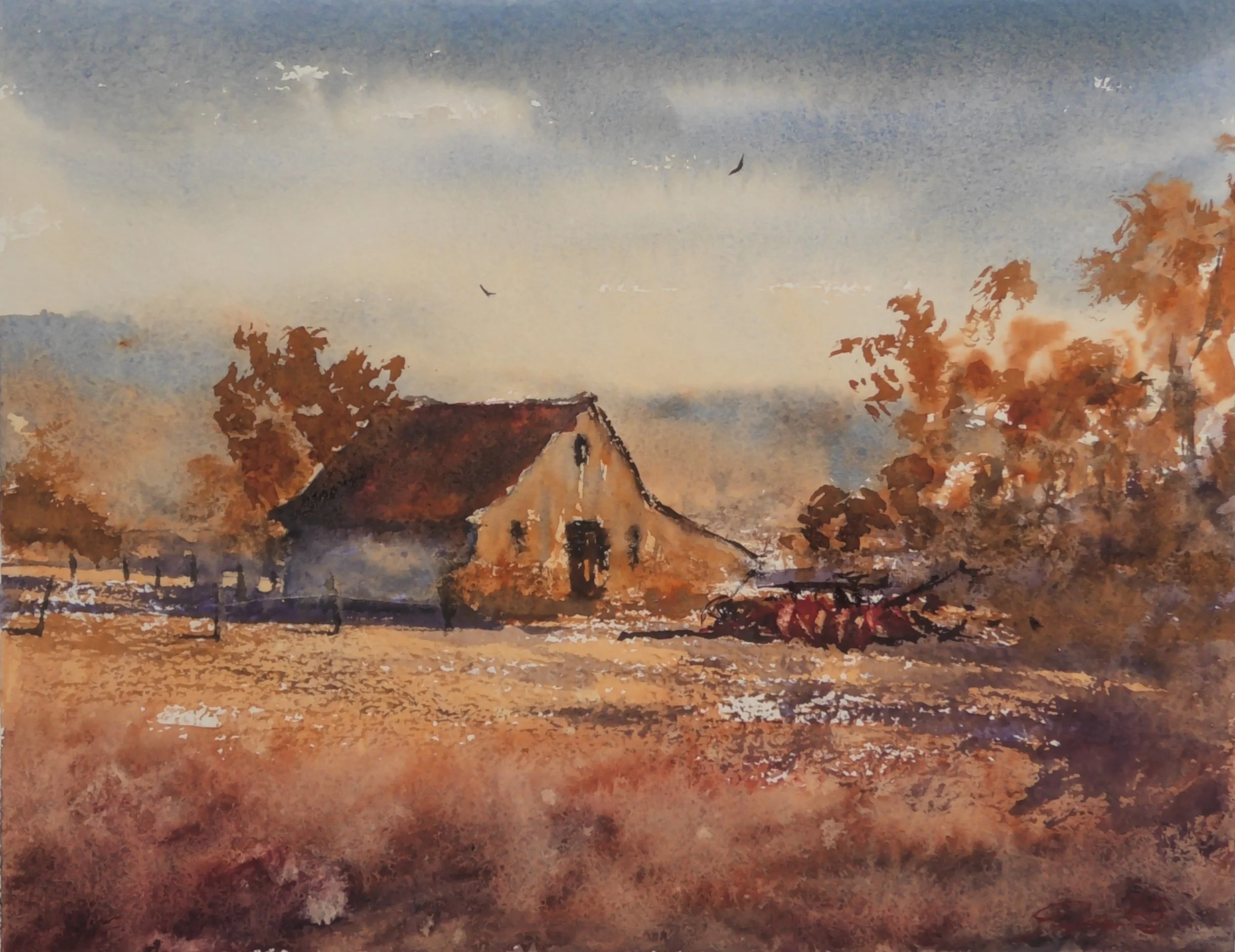
Warm colours (reds, oranges, warm yellows) tend to advance toward the viewer, while cool colours (blues, blue-greens, violets) tend to recede. This is not just theory — it mirrors what happens in nature. Sunlight warms planes that face the light, while planes that turn away fall into cooler light from the sky.
So when we paint a landscape:
Sunlit areas lean warmer
Shadowed areas lean cooler
Distance becomes cooler, softer, and slightly less intense
This temperature contrast creates the sensation of atmosphere far more convincingly than adding detail ever could. The viewer feels space rather than sees it described.
You can think of it as colour doing the work that beginners often try to force with drawing.
Edges — The Glue That Holds the Painting Together
A common beginner problem is what we might call the “cut-out effect.”
Mountains look pasted on. Trees look like stickers. Every object is outlined.
In reality, we do not see the world in lines — we see it in relationships of edges.
There are three main kinds of edges:
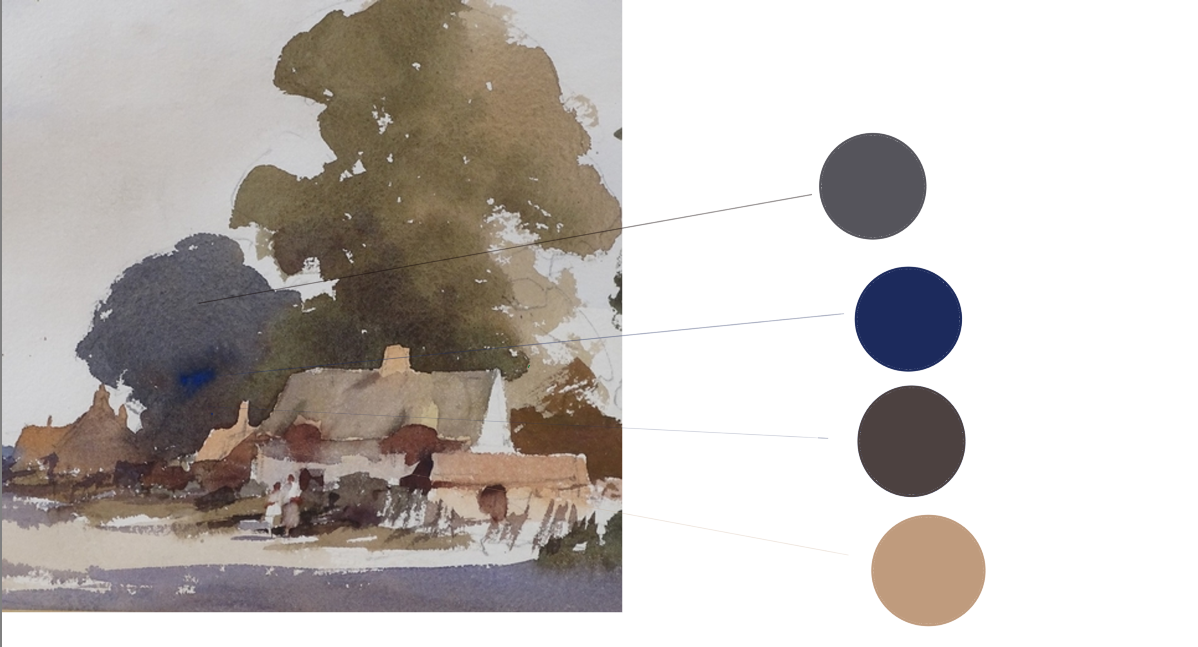
Soft edges — forms melt into one another (atmosphere, distance, turning planes)
Lost edges — where one shape disappears into another entirely
Hard edges — where there is a clear change in plane or focus
Nature is dominated by soft and lost edges. Hard edges are actually rare, and when used sparingly in a painting, they become powerful tools for directing attention.
If everything is sharp, nothing is important.
By softening transitions — especially in distant forms — we create that sense of wholeness where the scene feels unified rather than assembled.
Why Soft Edges Create Realism
The human eye cannot focus on everything at once. Vision naturally shifts, and only a small area is truly sharp at any moment.
So when a painting contains:
Too many hard edges
Too much separation between objects
…it actually looks less real, because it doesn’t match how we experience seeing.
Soft edges mimic the way light wraps around form and how atmosphere softens distance. They allow forms to sit in the environment rather than on top of it.
The Role of Selective Hard Edges
We do want some hard edges — just not everywhere.
A few carefully placed firm edges:
Anchor the focal point
Suggest structure without outlining everything
Give contrast that makes the surrounding softness believable
Think of hard edges as punctuation marks, not the whole sentence.
Less Detail = More Believability
Beginners often assume realism comes from adding more information. In fact, the opposite is usually true.
Too much detail:
Flattens space
Breaks atmosphere
Makes every area compete for attention
Reveals the painting as constructed rather than observed
In nature, detail fades as forms recede. When we simplify and allow areas to remain suggestive, the viewer’s brain completes the image — and that participation creates a stronger illusion of reality.
A good painting tells the viewer just enough, and lets perception do the rest.
A Simple Way to Think About It
Instead of asking:
“Have I painted everything?”
Ask:
“Have I kept the relationships of temperature, edges, and focus?”
If those are right, the painting will feel real — even with very little detail.